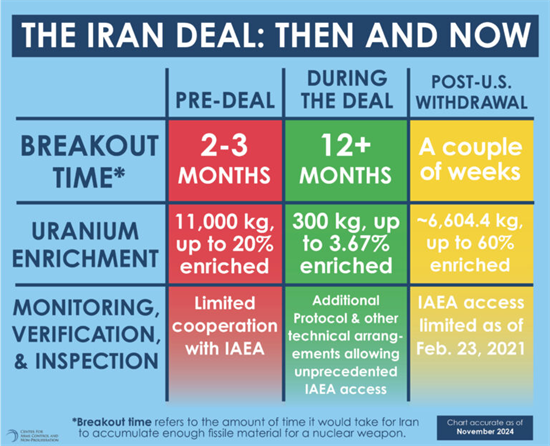
In 2015, President Obama negotiated and implemented the Joint Comprehensive Plan of Action (JCPOA) or the Iran nuclear deal with Iran, the United Kingdom, France, Russia, China and Germany. This unprecedented multinational agreement gave us more transparency into Iran’s nuclear program, blocked Iran's two paths to accumulate weapons-grade nuclear material, and it allowed the international community to feel confident that the country was not developing nuclear weapons. In 2018, President Trump withdrew the U.S. from the JCPOA. Since then, Iran has increased uranium enrichment with no transparency or accountability. That makes everyone less safe.
Since the U.S. and Israel attacked Iran in February, our military has executed its tasks with precision and excellence. But our tactical excellence is undermined by a lack strategy, objectives and planning from the civilian leadership in the Administration. And while Iran might previously have been intimidated into better behavior by a threat of an American attack, this attack has actually exposed our defense limitations. The Trump Administration’s rhetoric on the war has been contradictory at best and dangerous at worst. The President’s ultimately baseless claims and threats weaken any leverage or credibility we have to negotiate a peaceful, sensible resolution. The civilian death tolls and lack of accountability, while tragic in their own right, also create long term hostility to the US and our military. This leaves us vulnerable to retaliation on American soil.
These dangerous consequences for US national security are due to a war of choice that benefits no one when the JCPOA and even sanction agreements since 2018 had been working effectively. After withdrawing from the JCPOA, the Trump administration issued sanctions waivers for several years, meaning the U.S. agreed not to economically punish companies who worked to restrict Iran’s nuclear capabilities. These containment measures were working well, and I did not see an imminent threat to the United States that required immediate military action. Nor, according to reports, did our intelligence community perceive an imminent threat.
We all agree that the Iranian government poses a threat to U.S. national security and regional stability in the Middle East. Before the war, we always had three primary concerns with Iran: a nuclear weapon, their ballistic missiles program, and their status as a leading state sponsor of terrorism. Now, after the leadership was decapitated and the bombs all dropped, those three concerns remain, and we also have the added problem of the loss of control over the Strait of Hormuz. 20 percent of the world’s oil passes through the strait and Iran has now effectively implemented a toll booth to charge countries for passing through. That will keep gas prices sky high indefinitely, at a time when American families are already struggling to afford basic necessities.