Where we are after last year's historic shutdown ‌ ‌ ‌ ‌ ‌ ‌ ‌ ‌ ‌ ‌ ‌ ‌ ‌ ‌ ‌ ‌ ‌ ‌ ‌ ‌‌ ‌ ‌ ‌ ‌ ‌ ‌ ‌ ‌ ‌ ‌ ‌ ‌ ‌ ‌ ‌ ‌ ‌ ‌ ‌ ‌‌ ‌ ‌ ‌ ‌ ‌ ‌ ‌ ‌ ‌ ‌ ‌ ‌ ‌ ‌ ‌ ‌ ‌ ‌ ‌ ‌‌ ‌ ‌ ‌ ‌ ‌ ‌ ‌ ‌ ‌ ‌ ‌ ‌ ‌ ‌ ‌ ‌ ‌ ‌ ‌ ‌‌ ‌ ‌ ‌ ‌ ‌ ‌ ‌ ‌ ‌ ‌ ‌ ‌ ‌ ‌ ‌ ‌ ‌ ‌ ‌ ‌‌ ‌ ‌ ‌ ‌ ‌ ‌ ‌ ‌ ‌ ‌ ‌ ‌ ‌ ‌ ‌ ‌ ‌ ‌ ‌ ‌‌ ‌ ‌ ‌ ‌ ‌ ‌ ‌ ‌ ‌ ‌ ‌ ‌ ‌ ‌ ‌ ‌ ‌ ‌ ‌ ‌‌ ‌ ‌ ‌ ‌ ‌ ‌ ‌ ‌ ‌ ‌ ‌ ‌ ‌ ‌ ‌ ‌ ‌ ‌ ‌ ‌‌ ‌ ‌ ‌ ‌ ‌ ‌ ‌ ‌ ‌ ‌ ‌ ‌ ‌ ‌ ‌ ‌ ‌ ‌ ‌ ‌‌ ‌ ‌ ‌ ‌ ‌ ‌ ‌ ‌ ‌ ‌ ‌ ‌ ‌ ‌ ‌ ‌ ‌ ‌ ‌ ‌‌ ‌ ‌ ‌ ‌ ‌ ‌ ‌ ‌ ‌ ‌ ‌ ‌ ‌ ‌ ‌ ‌ ‌ ‌ ‌ ‌‌ ‌ ‌ ‌ ‌ ‌ ‌ ‌ ‌ ‌ ‌ ‌ ‌ ‌ ‌ ‌ ‌ ‌ ‌ ‌ ‌‌ ‌ ‌ ‌ ‌ ‌ ‌ ‌ ‌ ‌ ‌ ‌ ‌ ‌ ‌ ‌ ‌ ‌ ‌ ‌ ‌‌ ‌ ‌ ‌ ‌ ‌ ‌ ‌ ‌ ‌ ‌ ‌ ‌ ‌ ‌ ‌ ‌ ‌ ‌ ‌ ‌‌ ‌ ‌ ‌ ‌ ‌ ‌ ‌ ‌ ‌ ‌ ‌ ‌ ‌ ‌ ‌ ‌ ‌ ‌ ‌ ‌‌
Representative Scott Peters

Dear [salutation],


Right now, Congress is working to negotiate funding bills for Fiscal Year 2026 – bills that would help us avoid another partial government shutdown on January 30th. To end the longest government shutdown in our nation's history last year, Congress passed a continuing resolution (CR), which is an extension of current funding levels for a short period of time while we finalize a budget or annual spending plan. That CR set a funding deadline of January 30th. 


Since I came to Congress, I’ve been through 45 CRs. We have resorted to CRs far too often. A budget (we call it an "omnibus" spending plan) is what we need to complete this month. Congress holds the power of the purse, and we need to do our job. 


Breaking Down the Appropriations Process 


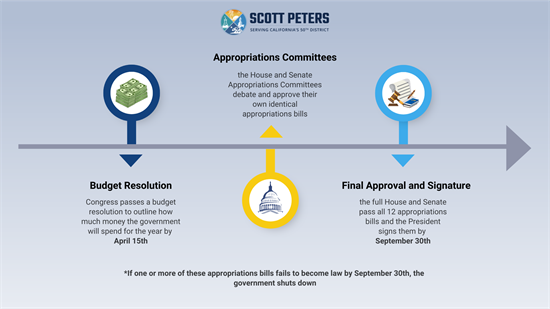
The Constitution gives Congress sole authority to tax and spend money for the federal government. We do this through the annual appropriations process. Here’s how that process is *supposed* to work: 

 
Graphic showing a simplified timeline of the annual Congressional appropriations process
 

Last September, House Democrats insisted that Congress include a provision to extend Affordable Care Act (ACA) tax credits that help Americans afford health insurance because they were set to expire on January 1st, 2026. For months, Republicans in Congress refused to come to the table and negotiate an extension of these tax credits, which resulted in a historic government shutdown—43 days. After Democrats secured commitments to reverse federal worker firings and hold a future floor vote on ACA tax credit extensions, Congress passed and the President signed the first three appropriations bills and the CR we're currently operating under on November 12th to reopen the government through January 30th.   


Advancing San Diego’s Priorities in Ongoing Negotiations 


Since Congress came back to Washington in January, the House has passed five more individual funding bills within two packages of legislation. We need to pass 12 in total for the President to sign. The packages are subject to change as they move through the Senate, but I’m glad they reflect key priorities for San Diego and Americans across the country. I’ll continue to advocate for what matters most to CA50 and hold the Trump Administration accountable by reasserting Congress’s power of the purse and taking steps to end their slash-and-burn approach, ensuring no one is above the law. Highlights of both legislation packages include: 


  • $158 million for the International Boundary and Water Commission (IBWC) to continue our work to tackle the cross-border sewage crisis 

  • $1 billion for the Small Business Administration, with a $13 million increase for Entrepreneurial Development Programs to support entrepreneurs and local job creators

  • $1.8 billion for clean, affordable, and secure energy programs to lower energy bills and $375 million to invest in our electric grid and improve reliability 

  • $2.8 billion for our nation’s water infrastructure, including drinking water, wastewater, and storm water management projects in San Diego 

  • $9.4 billion for Global Health Programs, including $5.8 billion to the U.S. President's Emergency Plan for AIDS Relief to support HIV/AIDS programs worldwide 

  • Curtails the reckless abuses of the Trump Administration by restricting efforts to dismantle entire agencies without Congressional authorization, blocking wasteful spending on useless vanity projects, and diminishing the Administration's ability to wipeout Congressionally approved spending 


Read my full statements on each critical funding package here and here.  


The House still needs to pass four of the remaining appropriations bills and the President needs to sign six of them in the next two weeks to avoid a partial government shutdown. The bills we have left are traditionally some of the most difficult to negotiate because they deal with polarizing topics like abortion access, gender-affirming care, and now Immigration and Customs Enforcement (ICE) funding. 


Reining in a Lawless Department of Homeland Security (DHS)


From the deadly shooting of Renee Good to terrorizing small businesses in San Diego, ICE agents are clearly operating without basic safety standards or accountability. With the passage of the so-called “Big Beautiful Bill,” which I opposed last year, the ICE budget was tripled, and now funded at levels higher than the entire U.S. Marine Corps and larger than most militaries in the world, including Turkey, Spain, and Mexico. That increase in funding was paid for with devastating cuts to Medicaid (Medi-Cal in California) and now efforts to block an extension of the ACA tax credits.  


President Trump campaigned on removing the worst of the worst violent criminals. We should do that. And to do that, we do not need to fund ICE at the current level.


That’s why it’s time for Congress to rein in ICE’s excessive and unchecked force. We can’t wait for the next tragedy. I introduced the Stop Excessive Force in Immigration Act to establish a stronger standard for federal immigration agents' use of force and make it easier to identify officers acting improperly. Senators Kelly and Gallego (both D-AZ) just introduced companion legislation in the Senate. I will monitor the DHS budget negotiations and will continue to push for reforms that keep our communities safe.  


Scott’s Reads 


  • This Washington Post OpEd explains why the bipartisan resolution I introduced to reduce our annual borrowing to 3% of our GDP by 2030 is critical to get our annual deficit and fiscal house back in in order.

  • This article talks about recent court victories for the wind and solar projects despite the Trump Administration's attempts to obstruct, pause, or cancel these desperately needed energy projects.


Please forward this email or encourage others to sign up to receive these updates here. And if there’s an issue or question you’d like me to address in an upcoming newsletter, send me a note here. 


Thanks, and take care.    

Scott Peters Signature
 
Scott H. Peters
Member of Congress
 

Stay Updated

 
facebook icon  twitter icon  instagram icon  youtube icon  bluesky icon
 
Unsubscribe

Privacy

Click here to open this e-mail in its own browser window